Your resume is good. Your experience is solid. You hit apply, and then nothing.
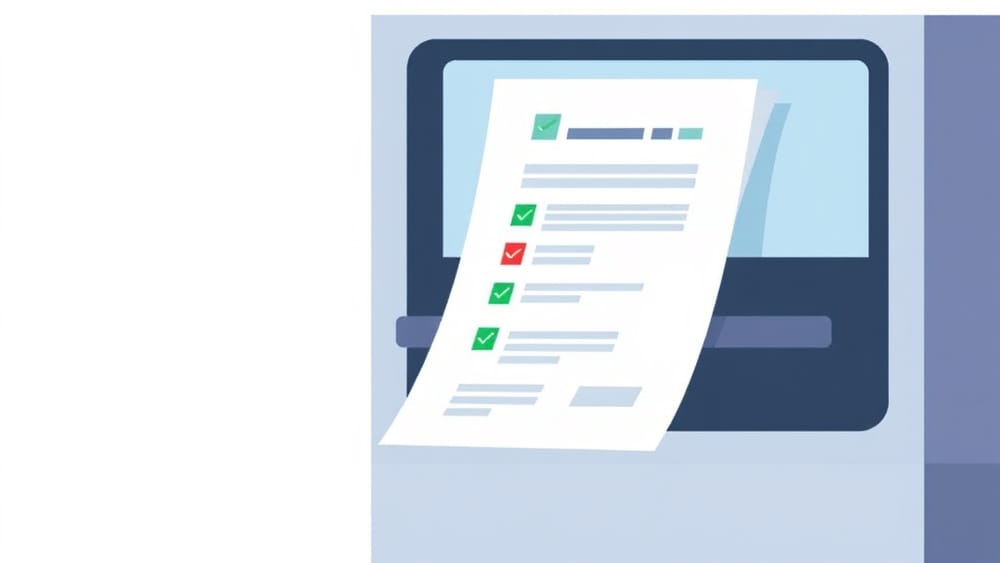
No callback. No rejection email. Just silence. Before you start second-guessing your career choices, here is what is probably actually happening: an Applicant Tracking System (ATS) screened you out before a single human being laid eyes on your resume.
The good news? This is not about your qualifications. It is about fixable, technical problems that most job seekers do not even know exist.
What an ATS Actually Does
An ATS is software that companies use to collect, filter, and rank job applications automatically. When you submit your resume online, the ATS parses it, which means it tries to extract your contact info, job titles, dates, skills, and education into a structured database.
If it cannot read your resume correctly, it does not ask for clarification. It either garbles your information or drops your application entirely. A recruiter never sees it.
Most mid-to-large companies use an ATS. So do many small ones. If you are applying online, you are almost certainly going through one.
The Most Common Reasons ATS Rejects Qualified Candidates
Formatting that breaks parsing. Tables, text boxes, columns, headers and footers, and graphics look polished in Word or PDF but are invisible or unreadable to most ATS software. The system cannot extract what it cannot see.
Missing keywords from the job description. ATS tools are often set to filter for specific terms. If the job posting says "project management" and your resume only says "led projects," the system may not connect the two. You need the exact phrase, not just the idea.
Wrong file format. Many systems prefer a clean .docx file over a PDF. Some handle PDFs fine, but fancy, design-heavy PDFs are a consistent problem. When in doubt, submit both if the application allows it.
Unconventional section headings. If you label your work history "Where I Have Worked" instead of "Work Experience" or "Professional Experience," the ATS may not categorize it correctly. Stick to standard headings.
Dates formatted inconsistently. ATS software calculates your years of experience using your employment dates. If your dates are ambiguous or missing, your experience may not register at all.
How to Tell If Your Resume Has ATS Problems
The simplest test is the copy-paste test. Copy the text from your resume and paste it into a plain text editor like Notepad. What you see is roughly what an ATS sees. If the text is scrambled, out of order, or missing sections, you have a parsing problem.
Beyond that, you need to compare your resume against each job description you are targeting. Look at the language used in the posting, the specific skills and tools named, and the way responsibilities are described. Then check if your resume mirrors that language closely enough.
This is exactly what Topapplicant does automatically. Built by Novion, Topapplicant analyses your resume against real job descriptions, flags ATS parsing issues, identifies missing keywords, and tells you specifically what to fix before you apply. It does not give you vague scores. It gives you actionable problems and concrete fixes.
What to Fix First
If you are sending out applications right now and not hearing back, prioritize these changes in order:
- Strip out the fancy formatting. No tables, no text boxes, no columns. Use a single-column layout with clear section breaks.
- Match the job description language. Pull the exact phrases from the posting and use them naturally in your bullet points.
- Use standard section headings. Work Experience, Education, Skills, Certifications. Nothing clever.
- Check your dates. Every role should have a clear start and end month and year, or "Present" for your current position.
- Save as .docx. Unless the application specifically asks for a PDF.
These five changes alone will get your resume past the filter at most companies. You do not need to rewrite your career history. You need to present the same experience in a format that machines can read.
The Bigger Picture
ATS rejection feels personal. It is not. It is a technical mismatch between how you formatted your information and what the system expects to find. Recruiters are not rejecting you. An algorithm is misreading you.
Once you understand that, the fix becomes straightforward. Audit your format, align your language to the job description, and make your resume machine-readable without sacrificing clarity for human readers. The goal is a resume that passes the ATS and still impresses the recruiter who opens it.
You can do both. You just have to know what to look for.
Check your resume for ATS issues right now at Topapplicant.