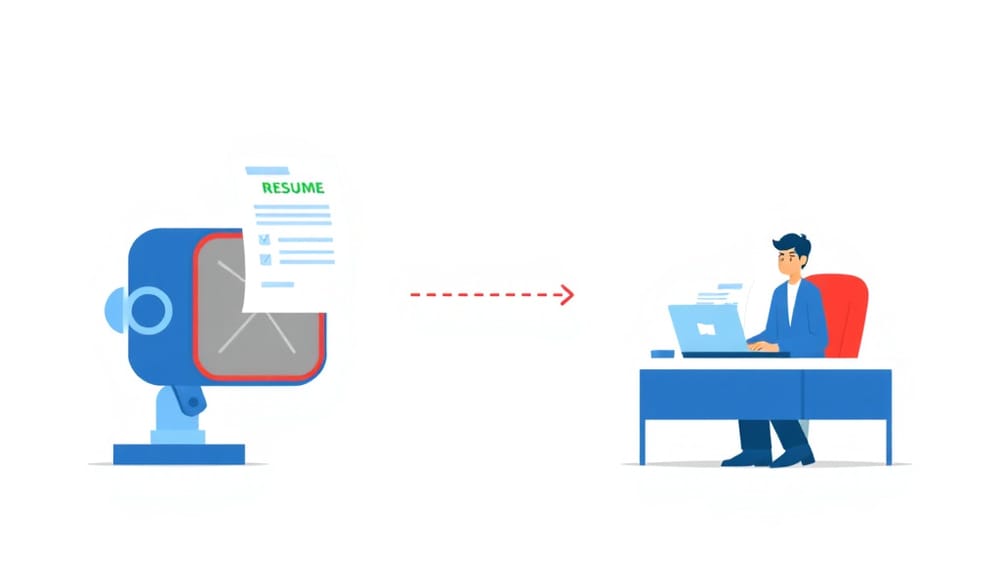
Your resume might be great. A hiring manager might love it. But they will never see it.
Three out of four resumes are filtered out by Applicant Tracking Systems (ATS) before a single human opens them. Most job seekers know this. What they get wrong is why it keeps happening to them.
The common fix is to stuff in more keywords. That used to work. It does not anymore.
ATS Has Changed. Most Advice Has Not.
Modern ATS platforms do not just scan for exact keyword matches. They use semantic analysis, meaning they understand context, synonyms, and relevance. A resume with "managed cross-functional teams" and "led interdepartmental collaboration" can score for the same skill. But a resume with broken formatting? That gets misread entirely, no matter how good the content is.
The formatting problem is the one most job seekers ignore. It is also the one doing the most damage.
The Formatting Mistakes That Kill Parsed Resumes
Here are the specific issues that cause ATS systems to garble or discard your resume:
Tables and columns. They look clean to the human eye. ATS software reads them left-to-right across the entire row, mixing your job title with your dates and your company name into a single line of nonsense.
Headers and footers. Many ATS platforms skip content placed in the header or footer of a Word document entirely. If your contact information is in the header, it may simply not exist in the parsed version.
Graphics, icons, and text boxes. These are invisible to most parsers. Skills listed inside a designed icon block? Gone.
Non-standard fonts and special characters. Unusual characters can corrupt text during parsing. Stick to clean, standard fonts like Arial, Calibri, or Georgia.
PDF versus Word. Some ATS systems struggle with PDFs. Unless the job posting specifies otherwise, a clean .docx file is the safer submission format.
Keywords Still Matter, But Context Is Everything
Semantic analysis means that cramming in keywords without context now actively hurts you. ATS systems look for skills mentioned in relation to outcomes, roles, and responsibilities. A keyword floating in a list of 30 skills at the bottom of your resume carries far less weight than the same skill woven into a bullet point with a result attached.
Instead of: Skills: Project Management, Agile, Stakeholder Communication
Write: Led Agile sprint cycles across a 12-person team, delivering three product releases ahead of schedule.
The second version passes semantic analysis. It also reads better to a human, which matters once you clear the ATS gate.
What a Clean, ATS-Friendly Resume Actually Looks Like
Simple formatting wins. Every time. Here is what to use:
- A single-column layout
- Standard section headings: Work Experience, Education, Skills, Summary
- Bullet points, not paragraphs
- Dates in a consistent format (Month Year or just Year)
- No photos, no logos, no sidebars
- Contact info in the body of the document, not the header
This is not exciting. It is not going to win a design award. It will get read by the system and passed to a recruiter.
The One Thing That Ties It All Together
Formatting gets you parsed. Keywords get you scored. But the combination of clean structure and contextual, specific language is what gets you through.
Most job seekers focus on one or the other. The ones getting interviews are doing both.
If you want to know exactly where your resume is failing, Topapplicant analyses your resume against ATS criteria, flags formatting issues, and gives you specific suggestions to fix them. It is built by Novion specifically to help job seekers get past the systems standing between them and the interview.
Stop guessing which part of your resume is the problem. Find out for certain.
Improve your resume now at topapplicant.novion.one.