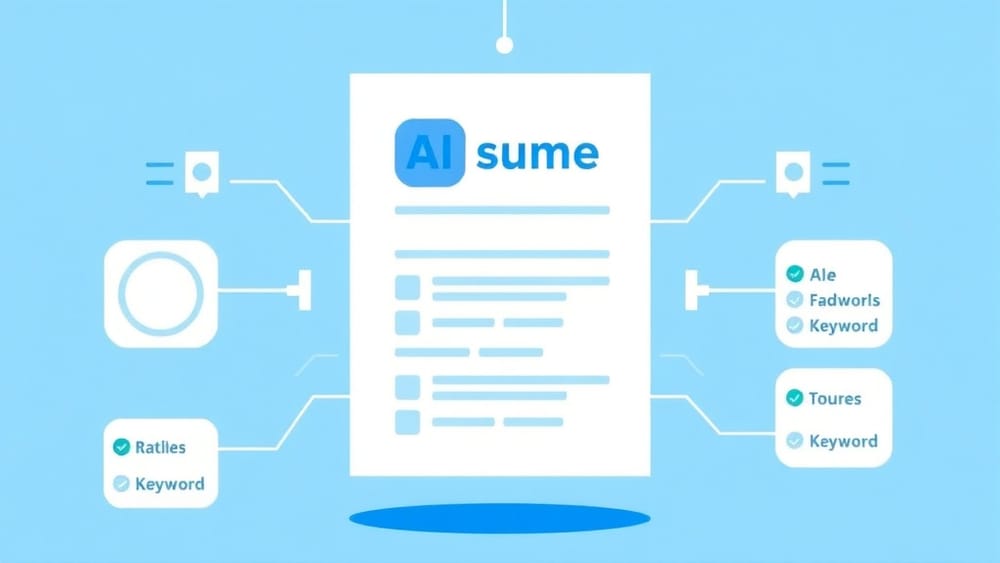
Your resume probably wasn't rejected by an ATS. It was buried.
There's a widespread myth that applicant tracking systems automatically reject 75% of resumes before a human ever sees them. It gets quoted in career advice articles, LinkedIn posts, and YouTube videos constantly. The problem: it's not how modern ATS actually works, and believing it leads job seekers to chase the wrong fixes.
Here's what's actually happening, and what you need to do about it.
ATS Ranks. It Doesn't Reject.
Modern ATS platforms, like Workday, Greenhouse, Lever, and iCIMS, don't have a binary pass/fail gate for most roles. They parse your resume, score it against the job description, and rank you against other applicants. Your profile goes into a list. Recruiters then search or filter that list.
If your resume scores low, it doesn't get auto-deleted. It just never surfaces. A recruiter searching for "product manager with Agile experience" will see the top 20 ranked candidates. If you're ranked 87th, you're invisible, not rejected.
The distinction matters because the problem isn't getting past a wall. It's getting high enough in the rankings to be seen.
The Real Gatekeeping: Keyword Gaps
Recruiter searches inside ATS are keyword-driven. They search for skills, job titles, tools, certifications, and phrases that appear in the job description. If those words aren't in your resume, you won't appear in results, even if you're fully qualified.
The data is stark: roughly 52% of average resumes are missing critical keywords from the target job posting. That's not a formatting problem. It's a language mismatch between how you describe your experience and how the job was written.
Common keyword gaps include:
- Job title variations: You managed "digital campaigns" but the role says "performance marketing."
- Tool names: You used the tool but never named it.
- Certifications and credentials: Listed under education but not in the skills or summary section where ATS parsing picks them up.
- Industry-specific terminology: Your resume uses internal company language that doesn't map to standard job titles or competencies.
What ATS Parsing Actually Does to Your Resume
Before scoring, ATS strips your resume into raw text. Graphics, columns, headers, tables, and icons often don't parse correctly. The system is looking for structured data: contact info, work history, job titles, dates, skills, education.
If your resume uses a two-column layout with a sidebar for skills, there's a high chance that sidebar gets parsed out of order or skipped entirely. If your job titles are inside a styled text box, they may not register as job titles at all.
This is where formatting problems actually hurt you: not because they look bad to a recruiter, but because they cause the ATS to misread or miss your content entirely. A lower-quality parse leads to a lower score.
How to Actually Improve Your ATS Ranking
This isn't about gaming the system. It's about clarity and alignment. Here's what works:
1. Mirror the job description language. Read the posting carefully. Note the exact phrases they use for skills, responsibilities, and qualifications. Use those same phrases in your resume where they genuinely apply to your experience. Don't fabricate, but don't paraphrase when the exact term is what the ATS searches for.
2. Use a clean, single-column layout. Avoid tables, text boxes, columns, and headers in the document's decorative sense. Use simple section headings like Work Experience, Skills, and Education. Standard fonts. No graphics.
3. Put keywords in multiple sections. A skill mentioned once in a bullet point carries less weight than one that appears in your summary, your skills list, and a work experience bullet. Repetition signals relevance.
4. Spell out acronyms. Write both the acronym and the full term at least once. Some ATS systems search for one but not the other. "Search Engine Optimization (SEO)" covers both searches.
5. Quantify outcomes in plain language. Numbers improve relevance scoring because they're specific and searchable. "Increased revenue by 34%" parses better than "drove significant business growth."
What Career Changers Need to Know
If you're switching industries or roles, your keyword gap is almost certainly wider than you think. The experience is real. The language is wrong.
For career changers, the fix is a targeted reframe. Don't rewrite your history. Rewrite how you describe it using the vocabulary of the role you're targeting. A teacher moving into instructional design should use terms like "learning management systems," "curriculum development," and "adult learning principles," even if their classroom experience is the proof.
This takes real analysis of job postings across multiple listings in your target role. Look for the words that appear consistently. Those are your priority keywords.
The ATS Myth Has a Cost
When job seekers believe the 75% rejection myth, they focus on the wrong things. They buy over-designed resume templates that look impressive but parse terribly. They obsess over visual formatting while their keyword density sits at a fraction of what it needs to be.
The real work is in the content: the right words, in the right places, aligned to the specific job you're applying for. That's what gets you ranked high enough for a recruiter to actually find you.
Topapplicant, built by Novion, analyses your resume against the job description, flags keyword gaps, and shows you exactly where your ranking is being hurt. It's built to give you the specific, actionable feedback that generic advice never does.
Improve your resume and see how you actually rank at topapplicant.novion.one.